
Vault Training Club
A production iOS fitness app with an AI coach in it, on the App Store after about two months of main build.
- ~2 months
- Main build to App Store
- 200+
- Exercise library, programmed by AI weekly
- AI-assisted
- Claude Code alongside hands-on engineering
A production iOS fitness application with a full Azure backend, built with AI-assisted development. AI runs through the product itself as well as the build: a conversational trainer, adaptive workout programmes, and food logging that reads a photo of your plate.
The Challenge
Build a complete, production-grade iOS fitness application from scratch with workout tracking, a full exercise library, nutrition and progress analytics, subscription management, and a secure backend with identity services that bridge Sign in with Apple and Microsoft Entra External ID into a unified authentication flow.
On top of that, the product itself had to be genuinely intelligent rather than a logging app with an AI badge: coaching that answers real questions, programmes that adapt, and food logging quick enough that people actually keep doing it.
The Approach
Claude Code in VS Code was used through architecture, coding, review and deployment, alongside hands-on engineering. The iOS client was built in Swift/SwiftUI, backed by Azure App Service for API, data and business logic. A custom identity layer joins Microsoft Entra External ID with Sign in with Apple to provide a seamless sign-in experience, and subscription management handles in-app purchases and entitlements end-to-end.
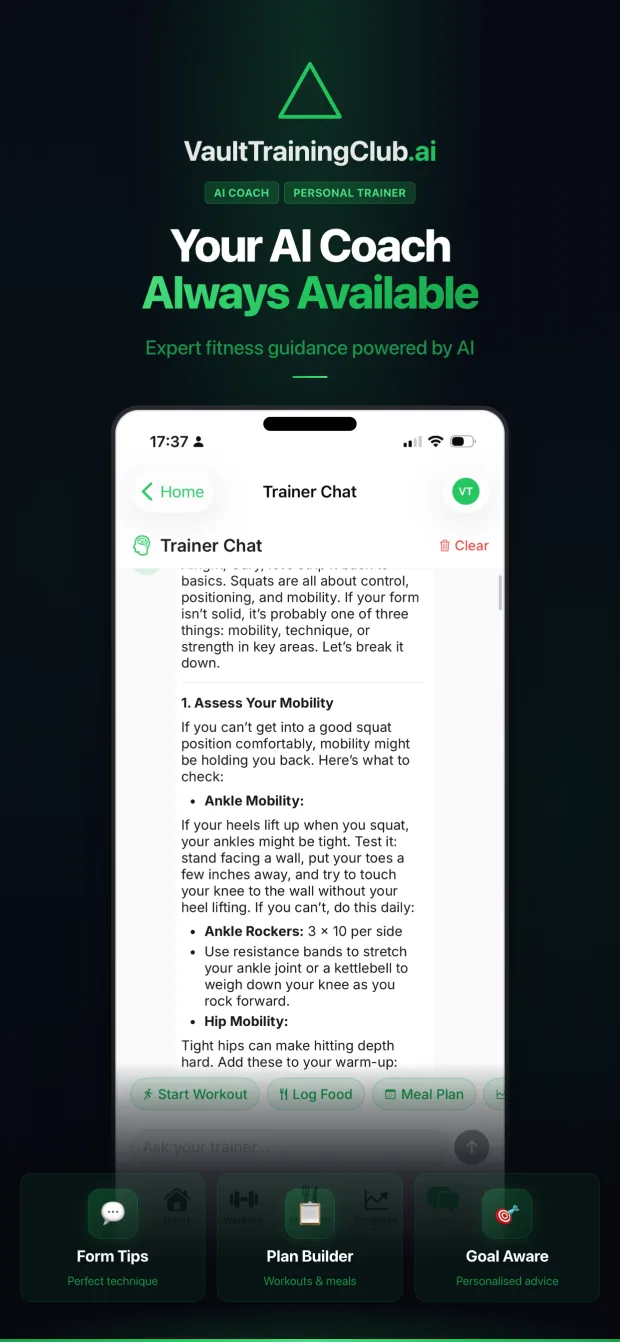
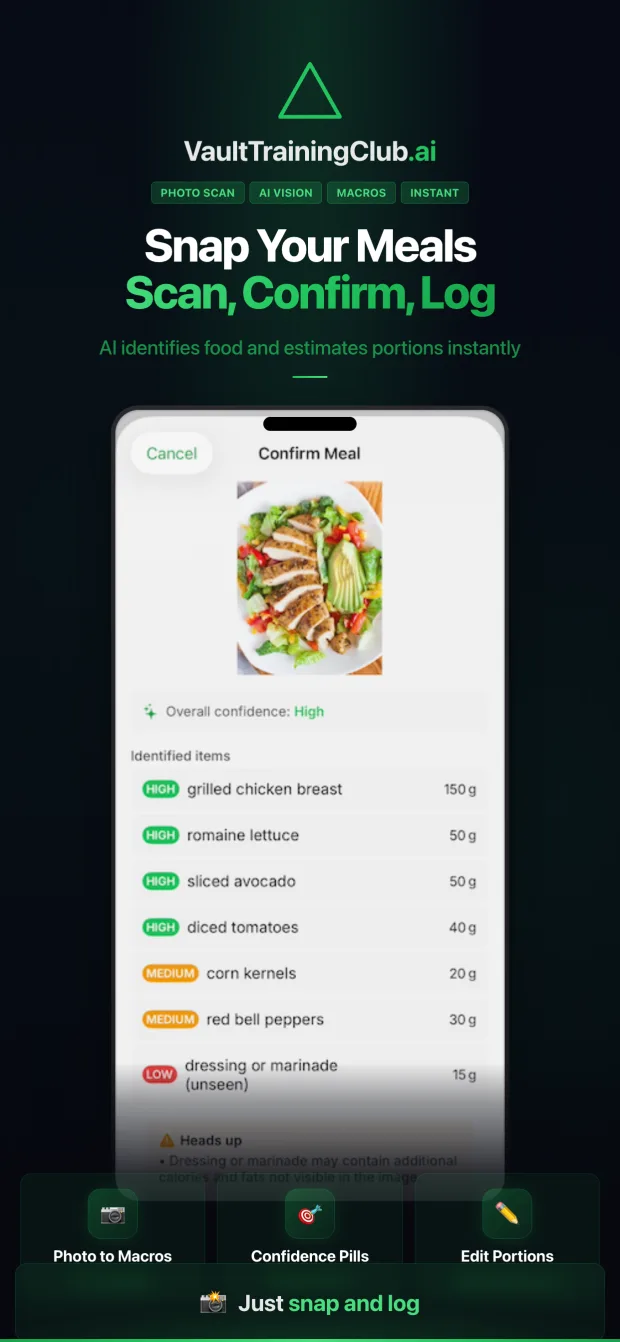
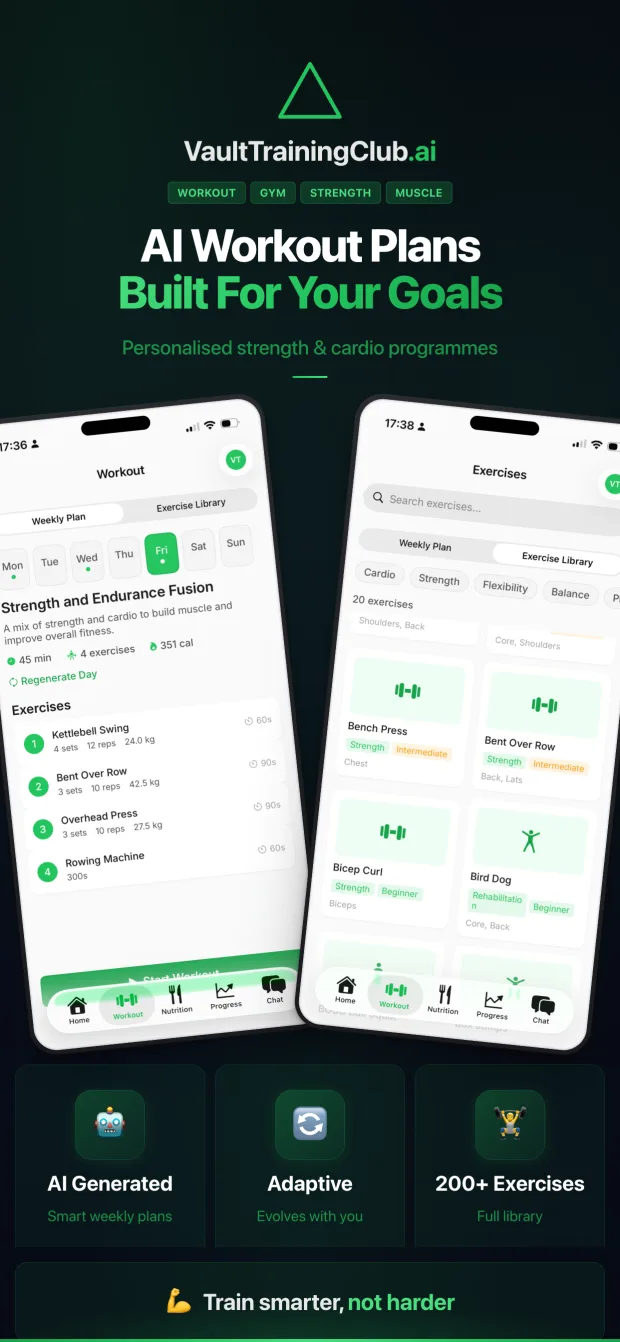
In the product, a conversational trainer answers technique and mobility questions in context, weekly programmes are generated and adapt over time across a 200+ exercise library, and meal logging uses image recognition to identify items and estimate portions, flagging how confident it is on each one rather than pretending to certainty it doesn’t have.
How it was built
People and AI built Vault together. The specification came first: in September 2025 a functional specification, a technical specification, framework requirements and a log of architecture decisions were committed before the first line of code. The main build then ran from January 2026 to the App Store release on 23 March 2026.
Claude Code worked inside conventions written down for the project: a CLAUDE.md guide sets the Clean Architecture layering, a six-step recipe for adding a backend feature, and the rule that every web component uses the design system’s theme. Of the 165 commits up to June 2026, 93 carry Claude Code’s co-author mark.
The native SwiftUI app went from its first commit on 9 February 2026 to the App Store in six weeks, on top of the .NET 9 API and React web client already in place. The API is split into four Clean Architecture projects using CQRS through MediatR. Profiles and trainer conversations live in Azure Cosmos DB, workouts and meals in Azure SQL Database, the AI features run on GPT-4o in Azure, and the infrastructure is defined in Bicep.
Before launch the work went through security fixes and hardening, a pre-go-live security and readiness analysis, a QA pass and a final go-live readiness check.
What shipped
- Main build to App Store in about two months, from a specification written in September 2025
- Full production-grade Swift/SwiftUI application
- Conversational AI trainer giving technique and mobility guidance in context
- AI-generated adaptive weekly programmes across a 200+ exercise library
- Photo-to-macros food logging with per-item confidence levels, added after launch
- 26 achievement badges across logging, training and nutrition streaks, added after launch
- Azure App Service backend with API and data layer
- Custom identity join between Microsoft Entra External ID and Sign in with Apple
- In-app subscription management and entitlements
Inside the app
Startups & Scale-ups
Want a production app in months, not years?
About two months of main build to the App Store, with people and AI working together from architecture through coding and deployment.
More case studies
NHS ESR Automation: Surrey and Borders NHS Trust
ESR, unattended, every night. An overnight reporting robot made reliable, and handed over as a pattern the Trust now builds on.
Events & FestivalsGloworm Festival App
The official app for one of the UK’s largest family festivals, built to work where the phone mast doesn’t reach.
Healthcare / NHSDigiCareCloud®
A FHIR-native community diagnostics platform, built to NHS standards and ready to pilot.